What could change in your work
One useful workflow at a time.
Start with one piece of work you keep repeating, not a whole new system. These examples show what a scoped implementation could change. They are possibilities to investigate, not completed client results.
CRM
Keep a promising conversation moving
Before
Someone asks about your programme, gets a reply and goes quiet. You search messages to remember what they needed and whether anyone followed up.
After a scoped implementation
A customer record brings the conversation, owner and next step together. A follow-up can be prepared using your agreed information, with a person checking it before it goes out.
How we would check the value: Track time spent finding context, overdue follow-ups and whether the next step happened. More messages sent is not the same as more customers.
Customer experience
Answer ‘I’ve paid. What happens next?’
Before
Open the receipt, search the customer's messages, check the calendar and ask whoever handles onboarding. Then work out who should reply.
After a scoped implementation
Payment, booking and onboarding status sit in one customer view. Missing or conflicting details go to a person before access changes or a reply is sent.
How we would check the value: Compare time to resolve the request and how often a customer has to ask again. Check accuracy as well as speed.
Operations
Start the day without checking every tab
Before
Open task lists, payment records and conversations to work out what is overdue, what has changed and what needs your decision.
After a scoped implementation
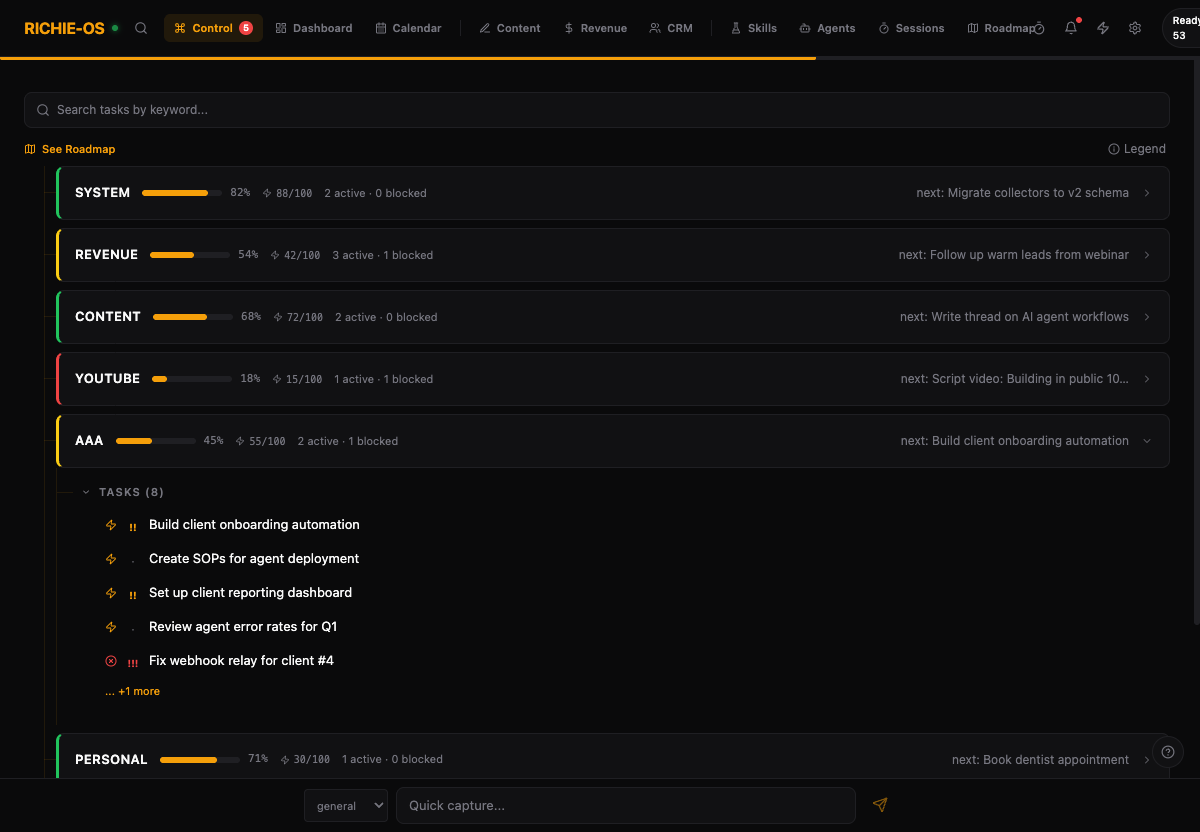
An operating view pulls agreed checks into a short list, with the source, owner and next action. You open the work behind an item rather than trusting a summary on its own.
How we would check the value: Time the daily review and count missed steps and corrections. Include the time needed to maintain the checks.
What is that worth?
Time the same task before and after, including the checks and corrections. Multiply the minutes saved by how often the task happens. That gives a capacity estimate, not a claim of extra revenue.